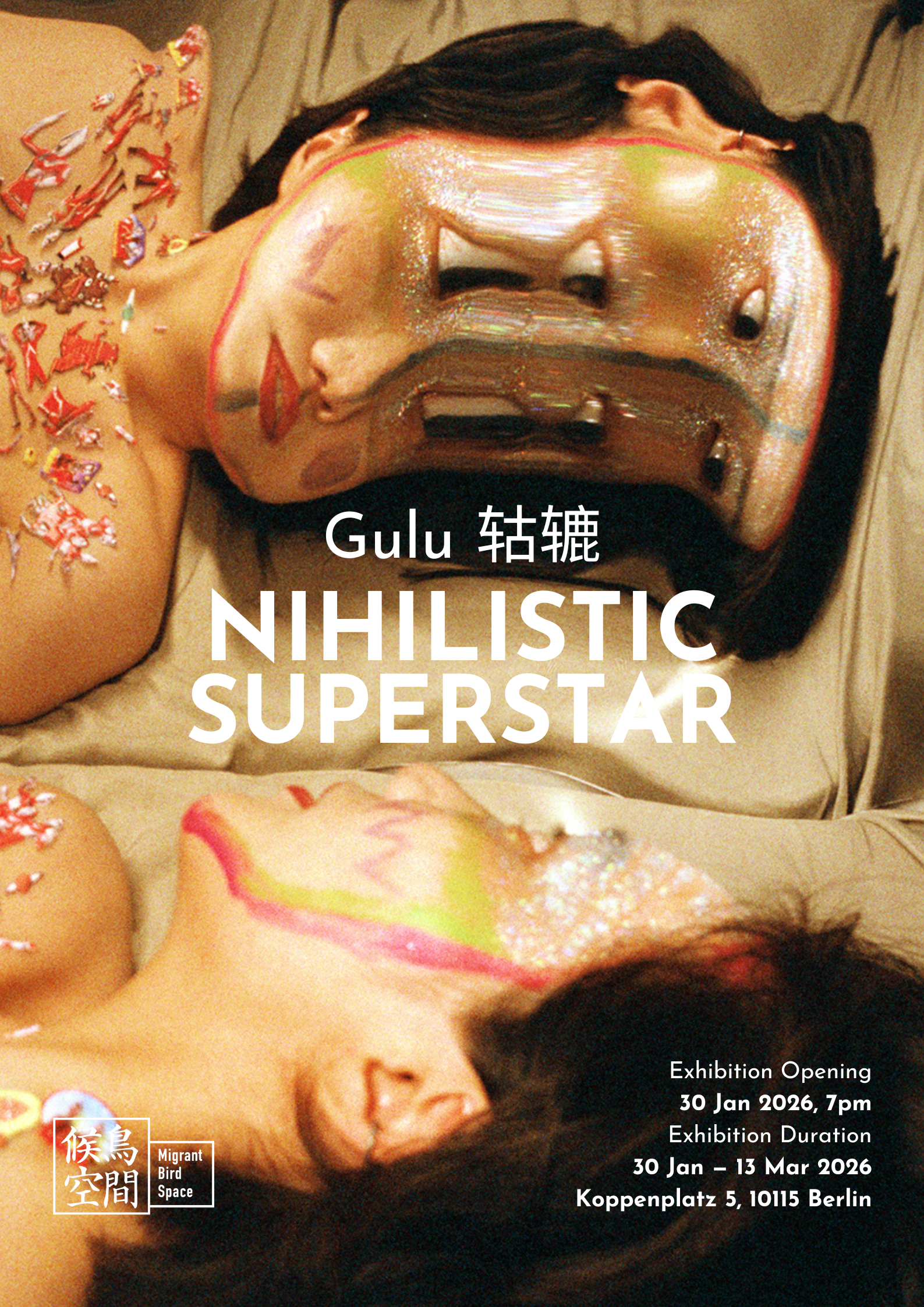
Gulu's photographs, made between 2021 and 2023, capture with striking clarity the emotional landscape that would soon define our global moment: young bodies navigating loneliness, desire, and fractured intimacy while struggling to stay alive amid a feeling of endings.
In an age governed by algorithms, made transparent by data, and driven by speed, we are losing something fundamental: the capacity to feel. Emotions get flattened. Pain gets filtered out. Intimacy goes digital. We're trained to be manageable. Depth, ritual, the unknown, the power of saying no—all of it is disappearing. This is what philosopher Byung-Chul Han calls our "age of emotional poverty."
However, when systems demand that we become smooth, efficient, and predictable, the body remains a space of resistance. It's where we push back against control, express our chaos, and reclaim depth.
The bodies in Gulu's images don't ask to be fixed. They exist through excess: curled up, torn apart, twisted, drunk, leaning on each other, sinking into darkness or exposed under harsh flash. This excess isn't decay; it's the life instinct. We transgress to prove we're still alive.
Intimacy here is no longer a stable promise but a fleeting connection. Loneliness isn't isolation but a bubble existence, each of us an island cut off by our times. The body isn't an object but a site where things happen and where contradictions converge without resolving.
This exhibition poses a question: How do we remain human in a post-human age?
At a moment when artificial intelligence rewrites knowledge, platforms reshape emotion, and algorithms manufacture desire, the only capacity we can truly hold onto flickers through these images: vulnerability, chaos, and the stubborn wish to love.
Gulu's photographs are prophecies about what's coming. As technology pushes us toward becoming "precise people," art reminds us that what makes us human lies precisely in what's imperfect, unstable, and beyond control.