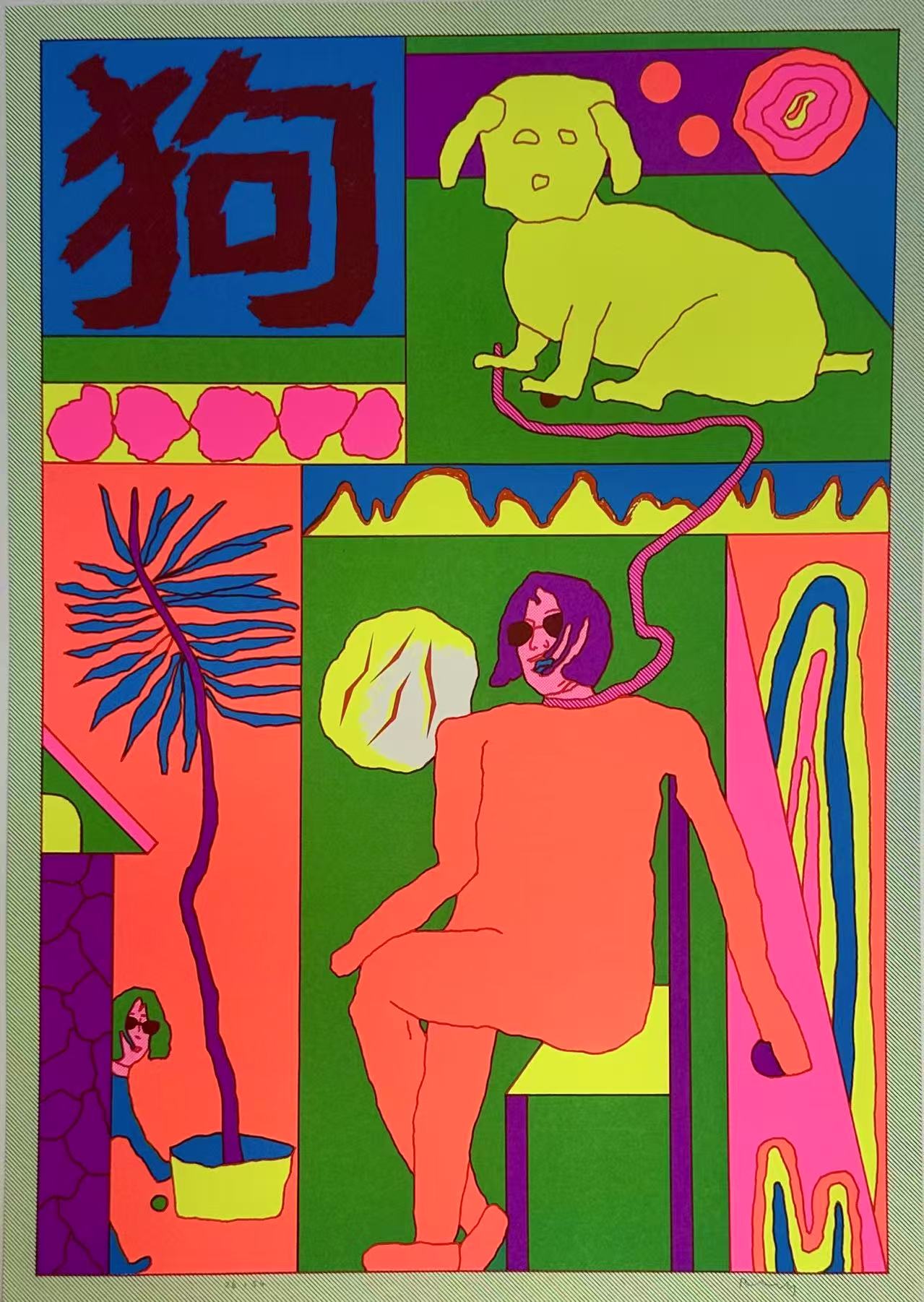
Maximalism resists reduction. Where minimalism foregrounded clarity, restraint, and purity of form, maximalism embraces a kind of aesthetic plenitude—opting instead for saturation and excess. This exhibition brings together works that not only embody the visual language of maximalism but also engage with its deeper critical possibilities: rebellion, experimentation, and cultural complexity.
At its core, maximalism is eclectic by nature. It thrives on contradiction, on the collision of styles, media, and references. In place of coherence, it offers polyphony. Its strength lies in its refusal to be easily categorized, instead weaving together disparate materials, motifs, and meanings into dense visual tapestries. This embrace of multiplicity challenges the modernist ideal of "less is more." Here, more is a strategy. It is a deliberate pushback against minimalism’s dominance in the canon and a reassertion of artistic freedom through visual and conceptual excess.
Color plays a foundational role in this mode of making. Rich, saturated, and often clashing hues do not simply decorate but declare. In maximalist work, color is not a secondary concern—it is central to how affect, emotion, and energy are communicated. The boldness of palette becomes an invitation: to feel, to question, and to experience without filter. In this, maximalism finds affinity with movements like the Pattern and Decoration movement of the 1970s and 80s, which similarly revalorized ornament, surface, and craft as sites of feminist and anti-hierarchical resistance.
Moreover, maximalism is not simply a style—it is a practice of experimentation. It foregrounds the process of making as much as the final form, and it gives permission to risk. In its most compelling expressions, maximalist work is less about perfection than it is about possibility. To layer, to fail, to revise, to overload—these are not accidents, but methodologies. In this sense, maximalism aligns with broader cultural shifts toward hybridity, non-linearity, and the dissolution of rigid genre boundaries.
Despite its richness, maximalism has often been dismissed in art and design discourse as excessive, decorative, or unserious. This exhibition insists otherwise. The works on view reclaim maximalism not only as a legitimate aesthetic mode, but as a critical and expressive tool—one capable of articulating complex identities, histories, and experiences.
By amplifying rather than subtracting, the works gathered here remind us that more is not just more; it is also another way of seeing, making, and meaning.